




Reading time: 6 minutes.
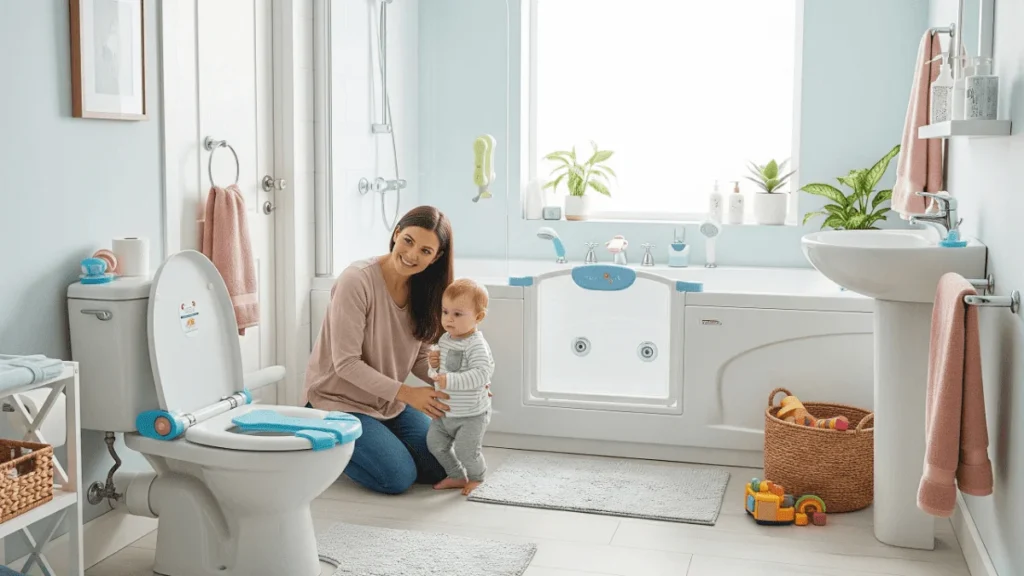
For any family, the bathroom presents a unique set of challenges, blending necessities like style and functionality with the absolute priority of safety. The good news is that creating a truly childproof bathroom no longer means sacrificing design or dealing with bulky, temporary fixes.
Have you ever found yourself in a bathroom with your little one, worried about sharp corners, slippery floors, and other potential hazards? Childproofing a bathroom can be quite the task, especially when you want to maintain a stylish aesthetic. As a parent, I have had my fair share of challenges balancing functionality, safety, and design in our home. Creating a child-friendly space doesn’t mean sacrificing style. Let’s dive into the art of crafting a bathroom oasis that’s both safe and chic for the whole family.
Understanding Bathroom Safety
When I first approached the daunting task of childproofing our bathroom, it was crucial to understand the specific hazards present in such a commonly used space. Bathrooms are known for slippery surfaces and hard fixtures, making them one of the prime spots for accidents in the home. Therefore, grasping the source of potential dangers is the first step towards an effective safety plan.
The smart home is no longer a luxury; it’s a necessity for productivity. In fact, recent reports show that the adoption of the Smart Home Devices market is projected to grow at an annual rate of 23% starting in 2025, reflecting a massive shift in how we interact with our homes [Forbes.com]
| Hazard | Potential Risk | Solution |
|---|---|---|
| Slippery Floors | Falls and injuries | Non-slip mats |
| Sharp Edges | Bruises and cuts | Cushion the edges |
| Hot Water | Scalding | Temperature guards |
| Unsafe Storage | Access to toxins | Childproof locks |
Having this blueprint was immensely helpful in assessing which areas needed immediate attention. It provided a clear path forward, ensuring nothing important slipped through the cracks as we moved onto the next stage.
Prioritizing Key Safety Features
After identifying the risks, the next step was prioritizing which safety elements to implement first. Our initial focus was on the installation of temperature-controlled faucets and the addition of anti-scalding devices. These features prevent the water from reaching unsafe temperatures, which can be a serious concern with toddlers who love to explore new sensations, including faucets and running water.
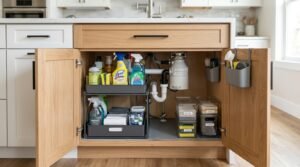
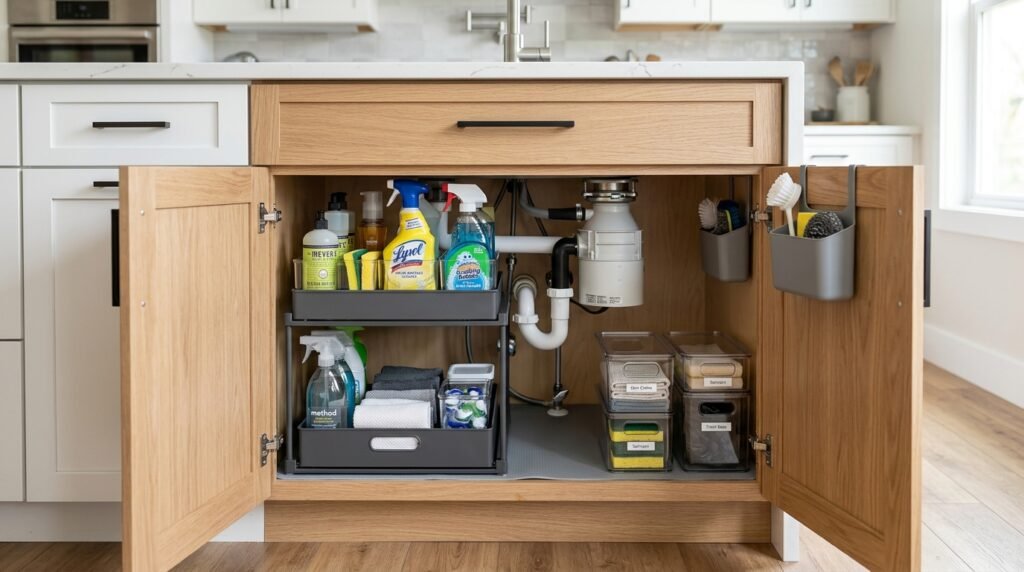
Another immediate fix was a set of non-slip bath mats. The bathroom floor can become dangerously slippery when wet, and an effective mat can dramatically reduce the risk of falls. Additionally, we upgraded our storage solutions with childproof locks to safely store bath products and cleaning supplies out of reach.
“Design is not just what it looks like and feels like. Design is how it works.” — Steve Jobs
Understanding that implementing safety features could aid in design was a turning point. We realized that childproofing didn’t mean abandoning aesthetics but carefully integrating both elements. Our journey taught us that functional design could coexist with safety.
Maximizing Space and Style
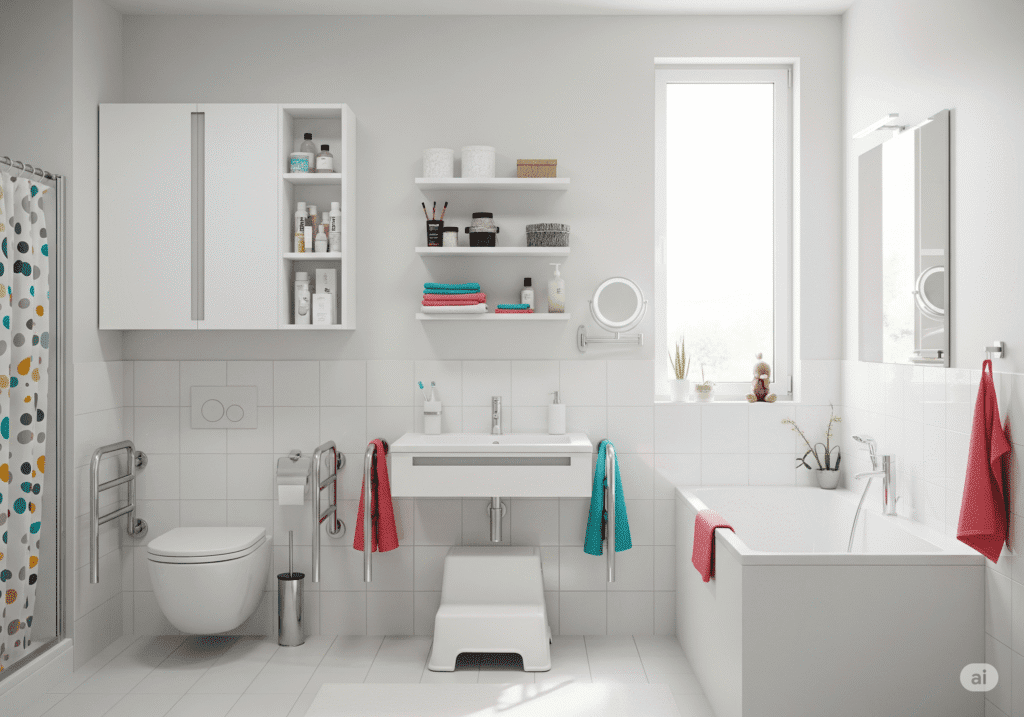
Limited bathroom space was our biggest challenge, especially while trying to accommodate safety features. By optimizing every inch effectively, we found creative ways to maintain a stylish yet secure environment. Wall-mounted storage became an ally, as it freed up floor space and kept potentially harmful items out of reach.
We also discovered the magic of multifunctional pieces: a vanity with a built-in step stool was a game-changer. It added ease for our child during handwashing while keeping the area compact and clutter-free.
Incorporating Stylish Safety Accessories
When integrating style alongside safety, accessories were instrumental. Here are some tips I gathered:
1- Opt for faucet covers shaped like playful animals, which act as protective gear and attractive decor.
2- Employ bath spout covers that double as whimsical bath toys for extra engagement.
3- Choose colorful, durable, and visually appealing toothbrush holders to encourage good hygiene habits.
4- Use themed shower curtains that can inspire creativity and add a splash of fun.
These small, stylish adjustments made a noteworthy difference, reinforcing the idea stated by Steve Jobs about design’s functionality and aesthetic combination.
Fostering Independence Safely
Encouraging independence was another important aspect of our project. Providing a step stool empowered our child to reach the sink independently, fostering confidence while brushing teeth and washing hands. To ensure safety, we chose a stool with a non-slip base and handles for easy maneuverability.
We also adjusted the height of towel racks and hooks, allowing our child to access them conveniently. These changes made the bathroom a child-friendly zone that grew with their abilities.
Ensuring Cleanliness and Hygiene
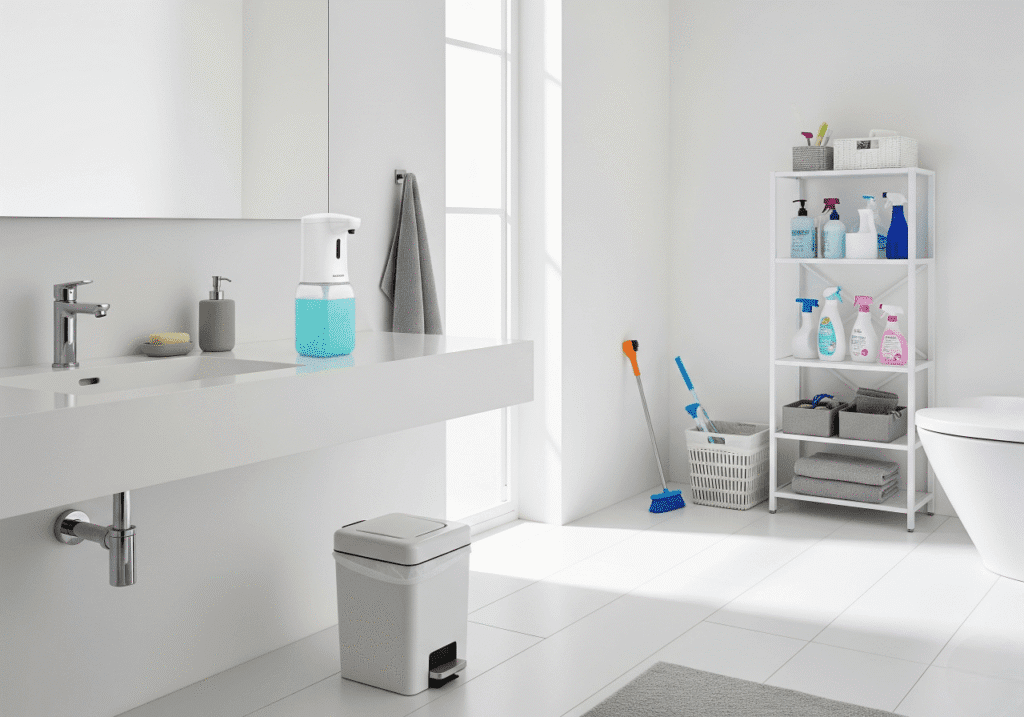
Maintaining a hygienic bathroom is crucial, especially with children prone to curious exploration. We invested in an automatic soap dispenser to minimize germ spread and a hands-free bin to effectively manage waste. Additionally, ensuring the bathroom was accessible for regular cleaning kept our environment both safe and sanitized.
Involving Kids in the Planning Process
Surprisingly, involving my child in the restructuring process turned into a valuable experience. It gave our child a sense of ownership over their environment, which instilled respect and care for the new setup. We made decisions together about color themes and decorative elements, turning it into a memorable, bonding journey.
Creating an Inviting Atmosphere
Striking a balance between safety and warmth was key to making the bathroom inviting. By using soft hues and warm lighting, we crafted a cozy and calming atmosphere. Wherever possible, soft textures replaced harsh materials to add comfort while maintaining a serene, stylish aesthetic.
Long-term Commitment to Safety
Childproofing a bathroom isn’t a one-time task; it’s an evolving process that requires periodic reassessment. As our child grows, so do their needs, prompting necessary updates to stay aligned with safety and comfort requirements. Continuous learning and adapting are essential.
FAQ – Common questions
How do I prevent slips in the bathroom?
Use non-slip mats and enforce a no-running rule to minimize the risk of falls.
Are faucet covers necessary?
Ideally, keep bath water below 38 degrees Celsius to prevent scalding.
What temperature should bath water be?
Ideally, keep bath water below 38 degrees Celsius to prevent scalding.
How can I ensure safe storage of bath products?
Use childproof locks on cabinets and store dangerous products out of reach.
Is it safe to have candles in a child-friendly bathroom?
Candles can enhance ambiance but only use them when children are directly supervised.
Can plants be used in a childproof bathroom?
Yes, ensure they are non-toxic varieties placed out of reach of children.
Childproofing a bathroom is indeed a journey of discovery and innovation. It is heartening to realize how a safe space can be harmoniously stylish and functional, removing the stereotype of having to sacrifice one for the other. Through deliberate planning and attentiveness to our child’s growth, we adapt constantly, creating an environment that is both protective and visually appealing. It reminds me of the transformative power of thoughtful design — one that prioritizes our family’s safety and comfort above all else.
- Want practical ways to organize without sacrificing safety? See our Creative Storage Solutions.
- Need a detergent that’s safe and sustainable for your family? Try our DIY Laundry Detergent.
Safety starts with smart choices—explore more ways to protect your loved ones.