








 Reading time: 5 minutes.
How often do you find yourself reaching for laundry detergent at your local store, only to feel overwhelmed by the choices and the cost? With rising concerns about sustainability and the need to be budget-smart, many individuals are turning towards do-it-yourself (DIY) alternatives in various aspects of their lives. DIY laundry detergent stands out as an effective way to blend ecological responsibility with economic sensibility. Let’s delve into how creating your own laundry detergent can become a worthwhile routine for both your wallet and the environment.
Understanding the Benefits of DIY Laundry Detergent
DIY laundry detergent presents a multitude of advantages that go beyond simple cost savings. At its core, creating homemade detergent reduces the influx of chemicals and toxins into the environment, which are often part and parcel of commercial detergents. This choice directly impacts not only your immediate laundry needs but also contributes positively to ecological sustainability over time.
| Benefit | Impact on Environment | Impact on Budget |
|---|---|---|
| Reduced Chemicals | Decreased Water Pollution | Lower Purchase Costs |
| Less Packaging Waste | Reduced Landfill Contribution | Avoids Hidden Packaging Costs |
| Customization | Use of Natural Ingredients | Focus on Essential Purchases |
| Efficiency | Optimized Cleaning Process | Long-term Savings |
Many DIY formulas use basic ingredients like washing soda, borax, and bar soap, which significantly cut down on the harsh chemicals found in conventional detergents. This not only helps maintain the quality of fabrics over time but also reduces the risk of skin irritations and allergies associated with synthetic substances.
Basic Ingredients and Their Roles
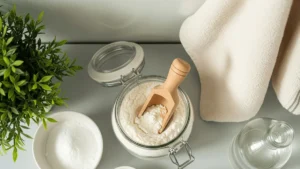
To create an effective DIY laundry detergent, it’s crucial to understand the role of each ingredient. Washing soda, a water softener, helps to remove stains and neutralizes odors. Borax, recognized for its whitening property, enhances the detergent’s effectiveness in cleaning clothes. Finally, bar soap, often in the form of grated soap flakes, acts as the primary cleaning agent, breaking down dirt and grime on fabrics. When combined, these ingredients strike a perfect balance, offering remarkable cleaning power without the overwhelming chemical footprint of regular detergents.
“The journey towards sustainability starts with small, impactful changes in our daily routines.” – Environmental Advocate
How to Create Your Own Detergent
Creating your own laundry detergent is a straightforward process. Here’s a simple method to guide you:
1. Grate one bar of natural soap, such as Castile.
2. Mix it with one cup of washing soda and one cup of borax.
3. Store the mixture in an airtight container.
For each load of laundry, use approximately two tablespoons of this mixture. This blend is not only efficient but allows you to experiment with quantities for optimal results based on your specific needs.
Cost Comparison: DIY vs. Store-Bought Detergents
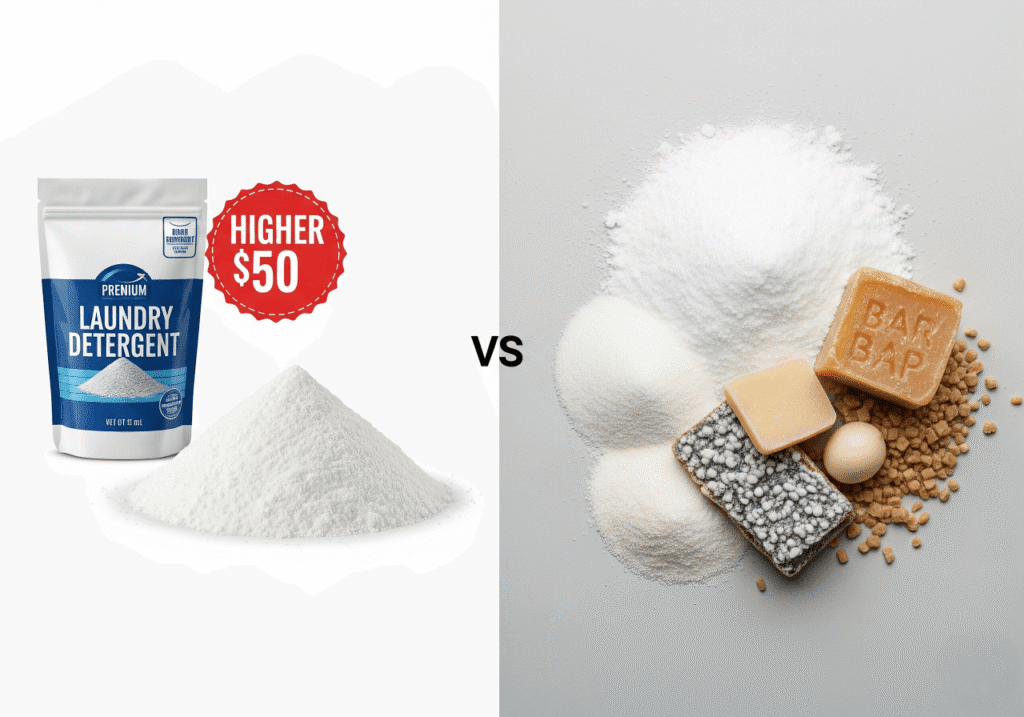
While store-bought detergents vary in price, DIY alternatives consistently prove to be more budget-friendly. The initial cost of purchasing ingredients like washing soda, borax, and bar soap is offset by the quantity and duration you can use them. This quick comparison illustrates the substantial cost efficiency:
– A typical store-bought detergent might cost around $0.20 to $0.30 per load.
– DIY detergent can cost as little as $0.05 per load, resulting in significant savings over time, especially for larger families or frequent washers.
Environmental Impact: A Closer Look
The environmental advantages of DIY laundry detergent extend beyond reduced chemical use. By making your own detergent, you decrease reliance on plastic packaging, which is prevalent in commercial brands. This decreases landfill waste and saves on natural resources used in packaging production. Additionally, you’re supporting a reduced carbon footprint by choosing ingredients that require less transportation and fewer manufacturing processes.
Possibility of Customization
DIY detergents allow for an impressive degree of customization. You can add essential oils like lavender or tea tree to imbue your laundry with natural scents that are devoid of synthetic fragrances, which could be harmful. Moreover, you have the freedom to adjust the proportion of ingredients to suit specific washing needs, such as extra washing soda for hard water areas. This not only caters to personal preferences but also optimizes the detergent’s performance across different washing conditions.
Bullet Point Breakdown of Making the Switch
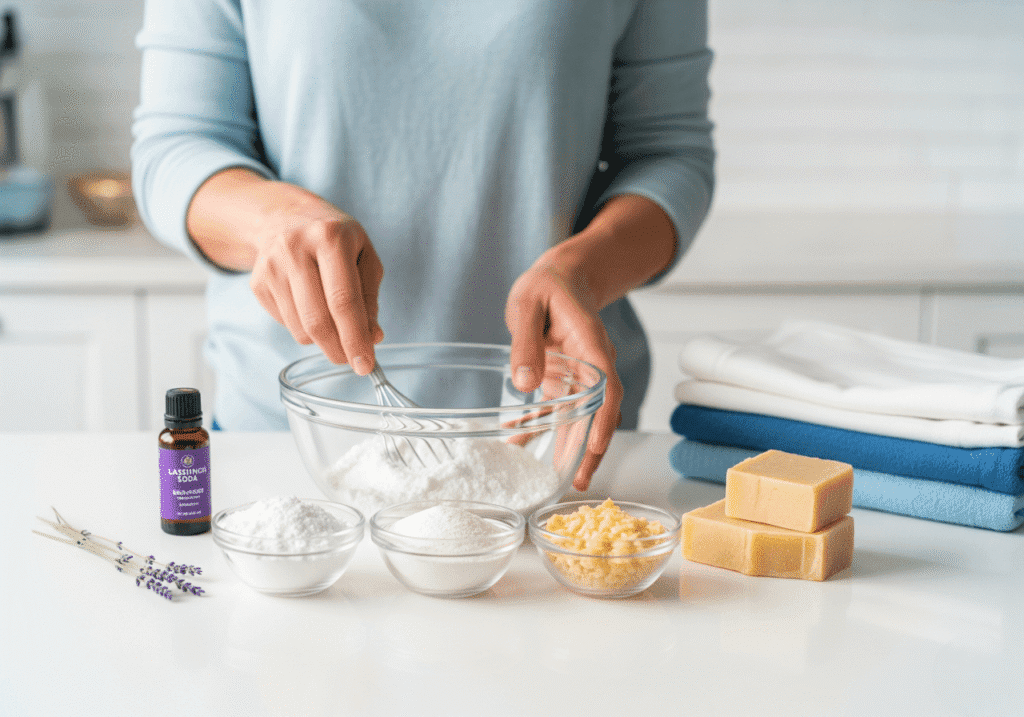
Deciding to switch to DIY laundry detergent can be broken down into straightforward steps:
1. Gather and understand the role of each ingredient.
2. Prepare the mixture with simple preparation steps.
3. Customize the blend to suit your needs with optional essential oils.
4. Enjoy cost savings and environmental benefits.
Addressing Common Concerns
While the incentive to switch to DIY detergents is high, certain concerns often arise. First, questions about efficacy compared to commercial brands are frequent. With the right proportions and mixing process, DIY options can match, if not surpass, the cleaning power of store-bought detergents. Additionally, apprehensions about ingredient accessibility are addressed by the widespread availability of the required materials, which can be found at any local grocery store or online marketplace.
FAQ – Common Questions
What is the shelf life of DIY laundry detergent?
When stored correctly in a cool, dry place, DIY laundry detergent can last up to a year without losing effectiveness.
Can DIY detergents be used in high-efficiency (HE) washers?
Yes, DIY detergents are low-sudsing and perfectly safe for HE washers, as long as you use them in the right proportions.
Are all-natural soaps necessary for DIY detergents?
While not mandatory, using natural soaps is recommended to ensure a gentle and eco-friendly cleaning process.
What can be used as an alternative to borax?
Baking soda can often be used as a substitute for borax, though it may alter the cleaning efficiency slightly.
Will homemade detergent work any differently in cold water?
DIY detergents generally dissolve well in cold water, but it’s advisable to pre-dissolve them in warm water for exceptionally cold washes.
 DIY laundry detergent offers a compelling combination of environmental benefits and budgetary savings. It encourages an eco-conscious lifestyle without compromising quality or cleaning efficiency. As more people seek sustainable living solutions, embracing homemade laundry detergents becomes an accessible and impactful choice. Through understanding the benefits and costs, as well as addressing common concerns, you can confidently integrate this practice into your household routine, making a positive difference one load at a time.
- Want to make the most of your laundry space? Discover our Small Laundry Room Ideas for smart and stylish solutions.
- Looking to reduce clutter? Check out our Creative Storage Ideas for Small Spaces.
Keep your routines sustainable and your space functional—these tips will help you take the next step.